

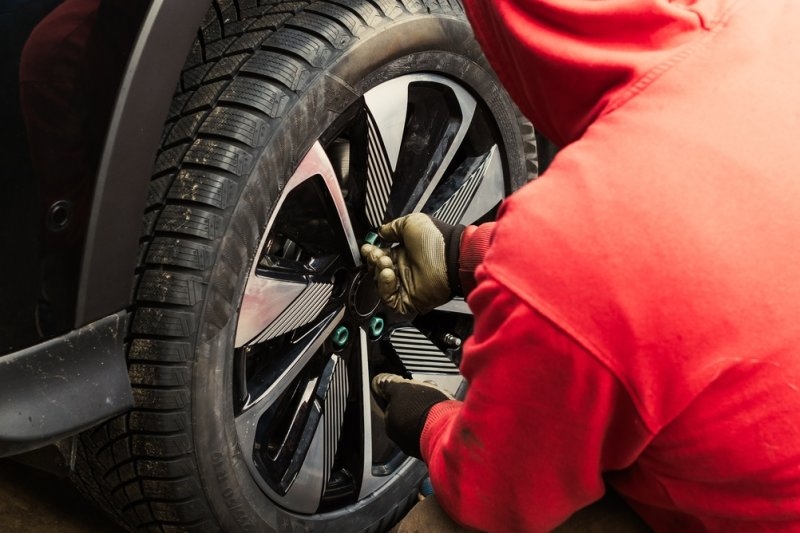
Tires wear down unevenly because of how your car steers, brakes, and accelerates—plus, the weight and the way your drivetrain’s set up dump extra stress on certain wheels. That’s why sticking to a rotation schedule matters.
Your manufacturer has the final say, so their instructions and tire design trump general advice. Skip tire rotation, and you’ll shorten tire life and lose traction—it’s not worth it. This blog breaks down how often to rotate, how to spot weird wear, and what’s in it for you.
One of the most common rotating intervals is every 5,000-8,000 miles, and typically this is done with an oil change. The intervals may be different for some vehicles, so please make sure to check the manual before making a booking.
The recommended tire rotation schedule is based on the type of tire, driving style, vehicle design, and manufacturer instructions. Long periods of highway driving can induce elevated and distinct wear as compared to stop-and-go driving, sharp turns, or prolonged driving on rough roads.
Never assume that damage is obvious. The sign of "uneven wear" can occur before it shows up.
The following ranges are a good starting point for many passenger vehicles. These are estimates only and not a replacement for the specified maintenance schedule for the vehicle.
| Driving situation | General rotation guidance |
|---|---|
| Typical daily driving | Every 5,000–8,000 miles |
| Frequent city driving | Check around every 5,000 miles |
| Long highway commutes | Follow the manual; inspect wear regularly. |
| Performance tires | Follow the tire and vehicle manufacturer's instructions. |
| New tires | Confirm the first rotation interval in the manual. |
One of these practical illustrations is an automotive driver who changes his automobile oil every 6,000 miles. If rotation is suggested by the manufacturer for that time frame, pairing them together can help to minimize missed appointments. However, the timing of oil changes is not the only factor to consider when it comes to the right tire rotation schedule.
Also Read: How Often Do Electric Cars Need Servicing? Full Breakdown
The optimal time for tire rotation is when tread wear is not widespread or deep, based on mileage and not by the time any handling issues appear.
Front-wheel-drive cars typically distribute weight to the front tires since they are responsible for steering and for delivering engine power. The tires in a rear-wheel-drive vehicle are subjected to different stresses when the vehicle is accelerating. AWD cars aren't necessarily even to give out like a single-axle engine might, so watch out for uneven wear.
The frequency of tire rotation on an AWD car will vary by manufacturer's specification, the type of tires, and acceptable tread-depth differences. One type of AWD is especially fussy about the tires' circumference, so it's always important to maintain them equally.
The owner's manual is the initial source for changing the tires and for changing interval suggestions from the manufacturer. Other brands will either give a mileage range or will base rotation on service or have other guidance for certain tire sets.
Also review the warranty for the tires. Some warranties need to be monitored and documented on an ongoing basis to make a treadwear claim. Maintain recording sheets or service records listing date, mileage, and service record.
A generic schedule is effective, but the manual will be our priority.
Suggested Reading: New vs. Used Cars in 2026: Which Saves More Money?
In addition to providing an extended tire life, even tread wear contributes further to keeping a vehicle's traction and predictable handling.
Rotate tires at recommended rotation times, before extreme differences of wear become apparent. Many front-wheel-drive vehicles wear the front tires out more quickly, and other cars may wear each tire in a specific pattern, depending on how the front wheels are aligned, loaded, or suspended.
Wear and tear can be distributed more evenly by rotating the tires regularly. However, it cannot fix existing damage or fix a wheel alignment issue. If a tire wears out more after being rotated, have it checked for alignment, tire pressure, suspension, and wheel balance.
If tires are not rotated often, some may wear at a rate that is higher than other tires. The outcome may be early tread replacement, lower wet-road grip, increased noise on the road, and changes in handling characteristics as differences increase.
The price can add up. Early tire replacement due to traction issues could be more costly than periodic tire rotation. If the entire vehicle is AWD, the large tread depth differences may also exert extra stresses in different drivetrains, depending on the manufacturer's tolerances.
Rotation is a solution but not a cure-all for all tire issues.
The correct rotation pattern will occur depending on tire design, wheel size, drivetrain, and directional or staggered tires.
| Pattern | Typical use | Important detail |
|---|---|---|
| Forward cross | Often used on front-wheel-drive vehicles | Front tires move rearward; rear tires cross to the front. |
| Rearward cross | Often used on rear-wheel-drive and some AWD vehicles | Rear tires move forward; front tires cross to the rear. |
| X-pattern | Suitable for some non-directional tire setups | Tires cross diagonally. |
| Side-to-side | Certain directional or staggered setups | Tires move across the same axle when permitted. |
It is important to note that these patterns are not suitable for every situation. Non-directional tires can be staggered and can have different treads on front and rear tires with the same-size tires. Directional tires roll in a specific direction. Change positions according to the manufacturer's instructions for the tires.
Mileage isn't the only thing to be monitored. Check tires regularly and schedule them to be serviced when you see:
Often these back signs do not indicate that rotation is the only solution. Check the tires for "pressure, balance, alignment, and suspension condition" as necessary, using a technician.
Don't Miss: When is the Best Time to Buy a Car for Maximum Discounts?
If you know your rotation schedule, it makes keeping up with maintenance way easier. Most people use that 5,000–8,000 mile range, but always double-check your manual. Some tires—like those made for specific handling, AWD systems, or staggered wheels—need special procedures.
Keep an eye on unusual wear patterns, log your service dates, and fix alignment or pressure issues as soon as you spot them. Tire rotation is a small job, but it pays off big: longer-lasting tires, steady handling, and fewer surprises on the road. Don’t put it off until your tires look ugly and the price tag for fixing it goes up.
Not necessarily. Issues like wheel imbalance, tire damage, bent wheels, or suspension issues can cause vibration. Have the cause inspected; don't just depend on rotation.
Before going before, inspect tires for wear, check the pressure, look for any damage, and consult the service schedule. Rotate if necessary; have any unusual wear checked.
Yes, replacement tires should be rotated as per the tire and vehicle manufacturer's guidelines. Make sure to confirm the first interval to ensure that wear is controlled.
Yes, you can with the correct tools, safe lifting equipment, and knowledge! Always use the prescribed lifting points, wheel torque, etc., on the vehicle—never use a jack alone.
Fuel economy is not significantly improved with rotation, but it can help to promote even wear. Having the correct tire pressure, proper tire alignment, and driving practices also influences fuel consumption.
This content was created by AI